How the Most Boring Outfit in Anime Became the Internet's Favorite Aesthetic
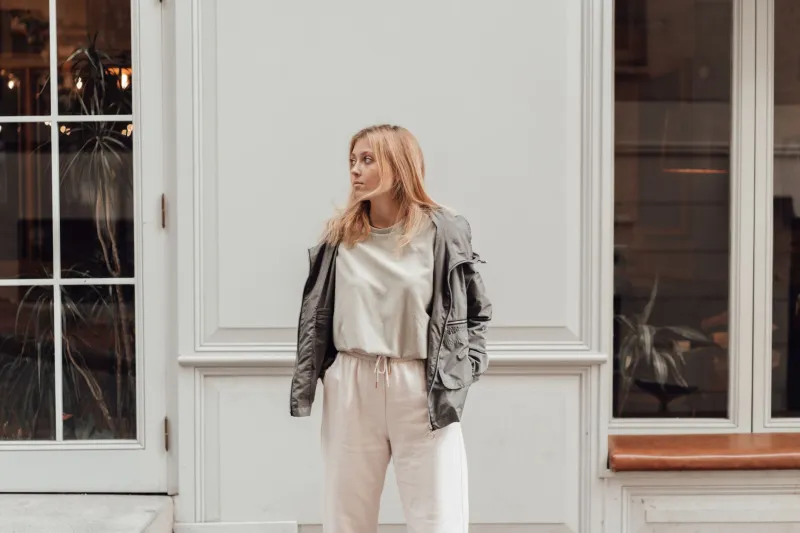
Let's get something straight right away: Tadano does not dress to impress. There's no signature jacket, no color-coded aesthetic, no dramatic trench coat moment. He wears the kind of clothes you'd find in the clearance section of a Target — plain, functional, completely unremarkable. And yet, somehow, Western fans have spent a genuinely surprising amount of time on Reddit threads, TikTok comment sections, and Discord servers dissecting exactly what he's wearing and why it hits the way it does.
Welcome to the Tadano wardrobe paradox. The guy dressed like he grabbed whatever was clean off the floor and accidentally became a reference point for an entire corner of fashion discourse.
The 'Nothing Fit' That Started Everything
For anyone who's spent time in thrifting communities — especially on TikTok or Instagram Reels — you've probably clocked the rise of what some creators are calling the "soft neutral" or "invisible guy" aesthetic. Muted tones, no logos, nothing that screams for attention. It's the anti-streetwear. And while nobody in those communities is necessarily citing Tadano directly, the overlap is hard to ignore.
The thing about Tadano's wardrobe is that it's not accidental in the narrative sense — it's deliberate character design. His creators built him to disappear visually, to signal immediately that this is not a flashy protagonist. But somewhere between that design intention and the Western audience receiving it, something unexpected happened. Fans didn't just accept the ordinariness. They started finding it aspirational.
Thrift communities on Reddit, particularly r/ThriftStoreHauls and adjacent spaces, have seen posts where users explicitly reference trying to nail "that Tadano energy" — a phrase that would've been genuinely confusing to anyone outside the fandom a few years ago. We're talking plain crew-neck sweatshirts, straight-leg chinos, sneakers that cost less than a nice dinner. The whole vibe.
Psychology of the Intentionally Unremarkable
Fashion influencers — the analytical kind who spend fifteen minutes explaining why a color palette communicates psychological safety — have actually started picking up on this. A handful of creators on YouTube and TikTok have done breakdowns of what they loosely call "anime normcore," and Tadano gets name-dropped more than you'd expect.
The argument usually goes something like this: in a medium absolutely saturated with characters whose outfits are practically screaming at you (spiky-haired protagonists in color-blocked jackets, anyone?), a character who wears nothing sends a very specific signal. It communicates groundedness. Approachability. A kind of visual humility that Western audiences, particularly Gen Z ones who are increasingly fatigued by performative branding, respond to on an almost instinctive level.
There's also something to be said about the way Tadano's wardrobe functions as a kind of blank canvas. Because he's not visually "claiming" anything through his clothes, fans project onto him more freely. His fit doesn't tell you who he is — his actions do. That's a genuinely unusual dynamic for anime, where character design often does a lot of heavy lifting in establishing personality before a single line of dialogue lands.
When "Boring" Becomes a Statement
Here's where it gets a little meta. In American fashion culture right now, there's a real tension between maximalism — the Brat summer, the dopamine dressing, the more-is-more energy — and a growing counter-movement toward deliberate minimalism. Not the expensive, curated minimalism of luxury fashion, but the kind of minimalism that says I'm not trying to signal anything to you at all.
Tadano, completely unintentionally, landed right in the middle of that second lane.
When fashion influencer accounts started doing "recreate this anime character's fit" content — a whole genre unto itself — most of them gravitated toward the obvious choices. Characters with iconic, distinctive looks that translate well into real-world styling. Tadano shouldn't have been a natural pick. And yet the videos where creators try to nail his exact vibe — the "I woke up, got dressed, and somehow this is a whole mood" energy — consistently perform well. Comments fill up with people saying things like "this is literally just how I dress" followed immediately by "wait, is that a compliment?"
That little moment of confusion? That's the Tadano paradox in real time.
What Western Fans Actually See in the Wardrobe
It's worth sitting with why this resonates specifically with Western, and particularly American, audiences. Anime fandom in the US has always had a complicated relationship with the more flamboyant end of character design. For a lot of casual fans — people who came to anime through streaming rather than through dedicated fandom spaces — the visual intensity of certain character aesthetics can feel like a barrier. It reads as "not for me."
Tadano's wardrobe removes that barrier completely. He looks like someone you'd see at a coffee shop in any mid-sized American city. That familiarity does real work. It's one of the reasons his character has functioned as an entry point for fans who weren't already deep in anime culture — and it's probably part of why his aesthetic has filtered out into real-world fashion conversations in a way that, say, a character with a more elaborate design might not.
There's also a class dimension here that doesn't get talked about enough. Tadano's clothes don't look expensive. They look like the wardrobe of someone who's not particularly focused on clothes, which in a media landscape full of characters who are quietly aspirational in their material circumstances, feels weirdly refreshing. The thrifting community's embrace of his aesthetic isn't just about the look — it's about the implicit statement that you don't need to spend money to have a vibe.
The Accidental Icon Problem
The genuinely funny thing about all of this is that if Tadano were a real person and someone told him he'd become a fashion reference point, he'd probably be baffled. That's kind of the whole point of the character. The accidental icon status is almost too on-brand.
But that's what makes it worth talking about. Fashion discourse usually centers on intention — the designer's vision, the character stylist's choices, the deliberate construction of an image. Tadano short-circuits all of that. His "look" exists specifically to communicate the absence of a look, and Western fans responded by turning that absence into something meaningful.
Is it a little ironic? Absolutely. Is it also a genuinely interesting window into how audiences find meaning in the spaces characters don't try to occupy? Yeah, it really is.
At Tadano Movie Hub, we talk a lot about what makes this character connect with audiences in ways that feel bigger than the source material might suggest. The wardrobe conversation is one of the stranger and more delightful examples of that. Sometimes the most powerful statement a character can make is wearing the least interesting clothes in the room — and letting everyone else figure out why that matters.