Quiet Struggles, Loud Impact: How Anime Gets Mental Health Right Where Hollywood Gets It Wrong
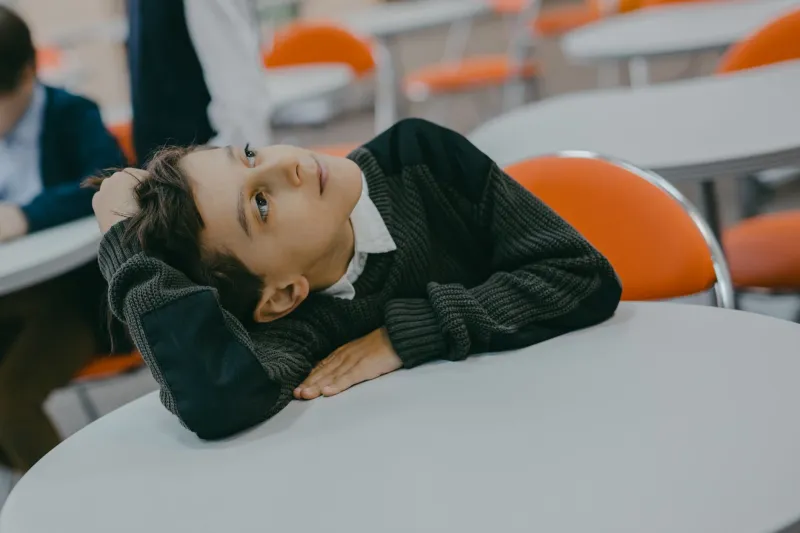
There's a scene early in Komi Can't Communicate where Tadano sits in a classroom, quietly reading the room, noticing every micro-expression and social undercurrent around him — and saying absolutely nothing. No dramatic internal monologue. No swelling score. Just a guy existing in the careful, exhausting way that a lot of anxious people actually exist. For a huge chunk of American viewers, that moment hit differently than anything they'd seen in a prestige drama or a feel-good studio film about "finding yourself."
That's not an accident. And it's worth talking about why.
Hollywood's Mental Health Playbook Is Getting Old
Western cinema has made genuine strides in bringing mental health conversations to the screen. Films like Silver Linings Playbook, A Beautiful Mind, and more recently The Whale have pushed those conversations into mainstream award season territory. That's not nothing. But there's a pattern baked into most of these productions that's hard to ignore once you see it: the struggle has to be visible. It has to be dramatic. It has to have a third-act breakthrough, a tearful confession, or a crisis point that signals to the audience, "this is the mental health part."
Hollywood tends to treat internal struggle as something that needs to be performed loudly for the camera. And honestly? That works for a lot of stories. But for viewers who live with social anxiety, introversion, or low-grade emotional exhaustion — the kind of stuff that doesn't look like anything from the outside — that approach can feel weirdly alienating. Like watching a documentary about your own life that got everything technically right but emotionally wrong.
What Tadano Actually Does Differently
Tadano's character doesn't announce his anxiety. He doesn't have a diagnosis scene or a rock-bottom moment that reframes everything we've seen before it. What he has is a method — a quiet, almost instinctive way of reading situations and managing his own reactions to them — that anime depicts through behavior rather than exposition.
Watch how he navigates a crowded hallway versus a one-on-one conversation. Watch the small adjustments he makes when someone around him is uncomfortable. The storytelling trusts the audience to understand what's happening without underlining it in red marker. That narrative restraint is doing a lot of heavy lifting.
Anime, especially slice-of-life anime, has a long tradition of showing interiority through atmosphere rather than dialogue. The visual language — quiet panels, ambient sound design, the camera (metaphorically speaking) lingering on small details — communicates emotional states that would require three scenes of exposition in a conventional Western screenplay. For viewers who are used to processing their own emotions quietly and internally, that approach doesn't just feel realistic. It feels like being seen.
The Representation Gap Nobody Talks About
Here's the thing about mental health representation: most of it, even the well-intentioned kind, centers experiences that are visible enough to be narratively convenient. Panic attacks. Breakdowns. Dramatic social failures. These are real experiences, and they deserve screen time. But they represent one end of a very wide spectrum.
A huge portion of people living with social anxiety or introversion-adjacent struggles don't have cinematic moments. They have a thousand small daily calculations — Is this the right thing to say? Did that come out wrong? Should I have stayed home tonight? — that don't make for great movie trailers but make up the actual texture of their lives.
Tadano lives in that texture. His character is built from those small calculations. And because anime's pacing and visual grammar are comfortable sitting with quietness in a way that mainstream Hollywood simply isn't, his story lands with an authenticity that bigger productions struggle to replicate even when they're actively trying.
For American fans — particularly Gen Z viewers who've grown up with more open conversations about mental health but fewer accurate depictions of what it actually looks like day-to-day — that authenticity isn't just refreshing. It's kind of radical.
Why This Gap Exists in the First Place
It would be easy to chalk this up to cultural difference and leave it there, but that's only part of the story. The structural realities of Hollywood filmmaking push toward dramatization. A two-hour film needs conflict that escalates and resolves. A streaming series needs hooks. Subtlety is a hard sell when you're pitching to a studio that needs to market the thing to a broad audience.
Anime — particularly manga adaptations with established fanbases — operates under different pressures. The source material already has an audience that understands the emotional register. The storytelling can afford to be patient because the readers already trust it. That patience is exactly what allows a character like Tadano to exist without being simplified or amplified for dramatic effect.
There's also something to be said for the fact that anime's depiction of social dynamics, school life, and interpersonal awkwardness often resonates with American viewers because it's slightly removed from their cultural context. The specifics are different enough to feel like fiction, but the emotional core is universal enough to feel personal. That combination creates a kind of safe distance that actually makes the representation easier to receive.
Does Hollywood Have Anything to Learn Here?
Some Western creators are clearly paying attention. The quieter, more behavior-driven approach to depicting anxiety has started showing up in indie films and prestige TV — Fleabag, Ramy, and Everything Everywhere All at Once all play with interiority in ways that feel more anime-adjacent than traditional Hollywood. But these are still exceptions rather than the rule, and they tend to thrive at the edges of mainstream distribution rather than the center of it.
The irony is that the audience for this kind of storytelling is enormous and growing. American viewers, particularly younger ones, are actively seeking out content that reflects the less dramatic, more mundane reality of living with anxiety or introversion. They're finding it in anime. They're finding it in Tadano.
Maybe the lesson isn't that Hollywood needs to start making anime. It's that the industry needs to get more comfortable with quietness — with characters who carry their struggles the way real people do, without announcement, without performance, without a guaranteed third-act epiphany.
Tadano figured that out without trying. It would be something if the biggest studios in the world could manage the same.