The Everyman Effect: Why American Anime Fans Can't Stop Rooting for Tadano

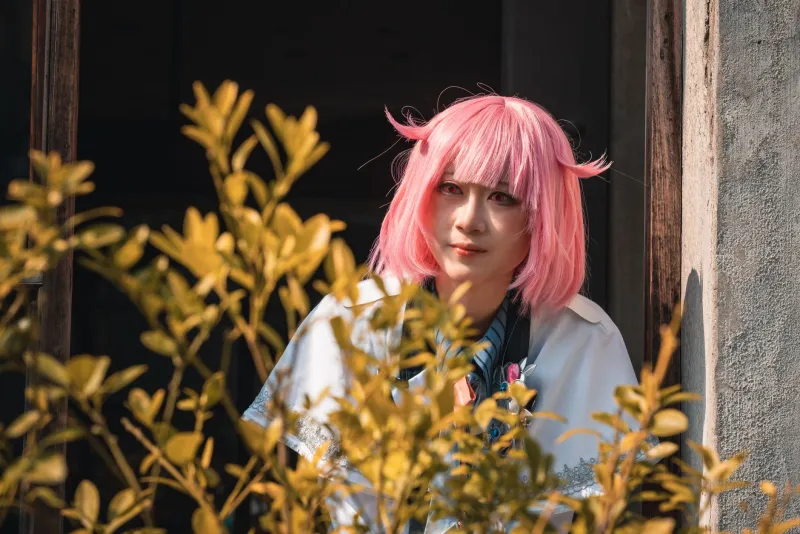
Photo by Photo by Marília Castelli on Unsplash on Unsplash
The Everyman Effect: Why American Fans Can't Stop Rooting for Tadano
Let's be honest — Tadano shouldn't be this popular.
On paper, he's not the guy you build a franchise around. He doesn't have a secret power. He's not destined for greatness. He doesn't dramatically remove his glasses to reveal some hidden intensity. He's a regular kid who made a social miscalculation, decided to keep his head down, and somehow ended up at the center of one of anime's most beloved stories.
And yet here we are. US anime fans have gone absolutely feral for this guy, and the fandom keeps growing. So what's actually going on? Why does Tadano resonate so deeply with Western audiences in particular? Let's talk about it.
America Has Always Had a Thing for the Underdog
If there's one narrative archetype that's baked into American pop culture DNA, it's the underdog story. From Rocky to Rudy to literally half the sports movies ever made, Americans love watching someone who's not supposed to win find a way to matter. It's practically a national pastime.
Tadano fits this template in a way that feels almost tailor-made, even though he was clearly created for a Japanese audience. He's not trying to be the best at anything. He's actively trying to avoid standing out. But circumstances — and one very particular classmate — keep pulling him into situations where his quiet perceptiveness and genuine decency end up being more valuable than any flashy talent could be.
That's an underdog story. It's just a quieter, more everyday version of one. And for a generation of American viewers who are kind of exhausted by maximalist hero narratives, that quietness is a feature, not a bug.
The Chosen One Is Getting Old
Here's an uncomfortable truth about mainstream anime protagonists: a lot of them follow the same basic blueprint. Exceptional power, special destiny, world-altering stakes. It's not that these stories are bad — some of them are genuinely brilliant. But after a while, the formula starts to feel like a default setting rather than a deliberate choice.
Western audiences, particularly millennials and Gen Z viewers who grew up on both American superhero content and anime, have started to show real signs of chosen-one fatigue. The same thing has been happening in Western media — look at how many recent hit shows and movies have deliberately subverted or deconstructed the "special protagonist" trope. Audiences are hungry for something different.
Tadano offers that something different. His superpower, if you can even call it that, is emotional intelligence and social observation — skills that feel genuinely attainable rather than fantastical. When he figures something out or handles a situation well, it doesn't feel like destiny. It feels like he earned it, which is a completely different emotional experience for the viewer.
He Reminds Us of Someone We Know (Or Someone We Were)
This is maybe the most direct explanation for Tadano's appeal, and it's one that US fans talk about constantly in fandom spaces. He's relatable in a way that transcends cultural specifics.
High school social anxiety? Universal. The fear of embarrassing yourself and having it define you? Universal. The experience of watching someone more charismatic and socially fearless and feeling a complicated mix of admiration and intimidation? Deeply, painfully universal.
Tadano's specific situation is rooted in Japanese school culture, but the emotional core of his character — the careful self-monitoring, the genuine desire to connect, the conflict between wanting to stay safe and wanting to actually live — translates without friction. American viewers don't need the cultural context explained to them because they've felt the same things in their own contexts.
This is actually pretty rare. A lot of anime characters require some cultural translation for Western audiences to fully connect with. Tadano kind of doesn't. He just makes sense.
Streaming Made Him Accessible, Fandom Made Him a Phenomenon
We can't talk about Tadano's US popularity without acknowledging the infrastructure that made it possible. Five years ago, getting into a niche anime franchise required real effort — tracking down fansubs, navigating import options, hoping your local library had the manga. Today, streaming platforms have collapsed that barrier almost entirely.
When a show featuring Tadano is available on a major streaming service with a solid English dub option, it gets discovered by people who would never have sought it out intentionally. Casual viewers stumble in, get hooked, and then — crucially — take it to social media.
This is where the fandom amplification effect kicks in. TikTok edits, Twitter threads, Reddit deep-dives, YouTube video essays — the online conversation around Tadano has been enormous, and it creates a feedback loop. Someone sees a clip, gets curious, watches the show, becomes a fan, creates content, and the cycle continues. Tadano's understated appeal actually makes him ideal for this kind of fandom ecosystem because he's easy to project onto and endlessly discussable.
Comparing Notes: Tadano and His Western Counterparts
It's worth asking — are there Western characters who occupy a similar space? The self-aware, emotionally intelligent everyman who succeeds through observation and decency rather than power?
A few names come to mind. Jim Halpert from The Office has some of that energy — the guy who's aware of the absurdity around him, uses that awareness as a coping mechanism, and turns out to be more emotionally capable than he initially lets on. Early seasons of characters like Aang from Avatar: The Last Airbender touched on similar themes of reluctant heroism. Even characters like Peter Parker (specifically in his more grounded, neighborhood-level stories) share some DNA.
But none of these are quite the same. Tadano's particular brand of studied ordinariness feels distinct even in that company. He's not a reluctant hero who's secretly extraordinary. He's a genuinely ordinary person who's extraordinary in ordinary ways. That's a subtler and arguably more interesting distinction.
What Tadano Tells Us About Where Anime Fandom Is Going
Tadano's popularity in the US isn't just a fun fact about one character — it's a signal about where audience tastes are heading. Fans, particularly younger ones, are increasingly drawn to stories about emotional authenticity over spectacle. They want to see characters process feelings, navigate relationships, and grow in ways that feel real.
Anime has always been capable of delivering that. But the Western mainstream is only recently catching up to the idea that anime isn't one thing — that it contains multitudes, including quiet, character-driven stories about regular people having regular-sized problems.
Tadano is, in many ways, a perfect ambassador for that version of anime. He's proof that you don't need to save the world to be worth watching. Sometimes you just need to be honest, pay attention, and show up for the people around you.
And apparently, that's enough to build a fanbase that spans continents.